
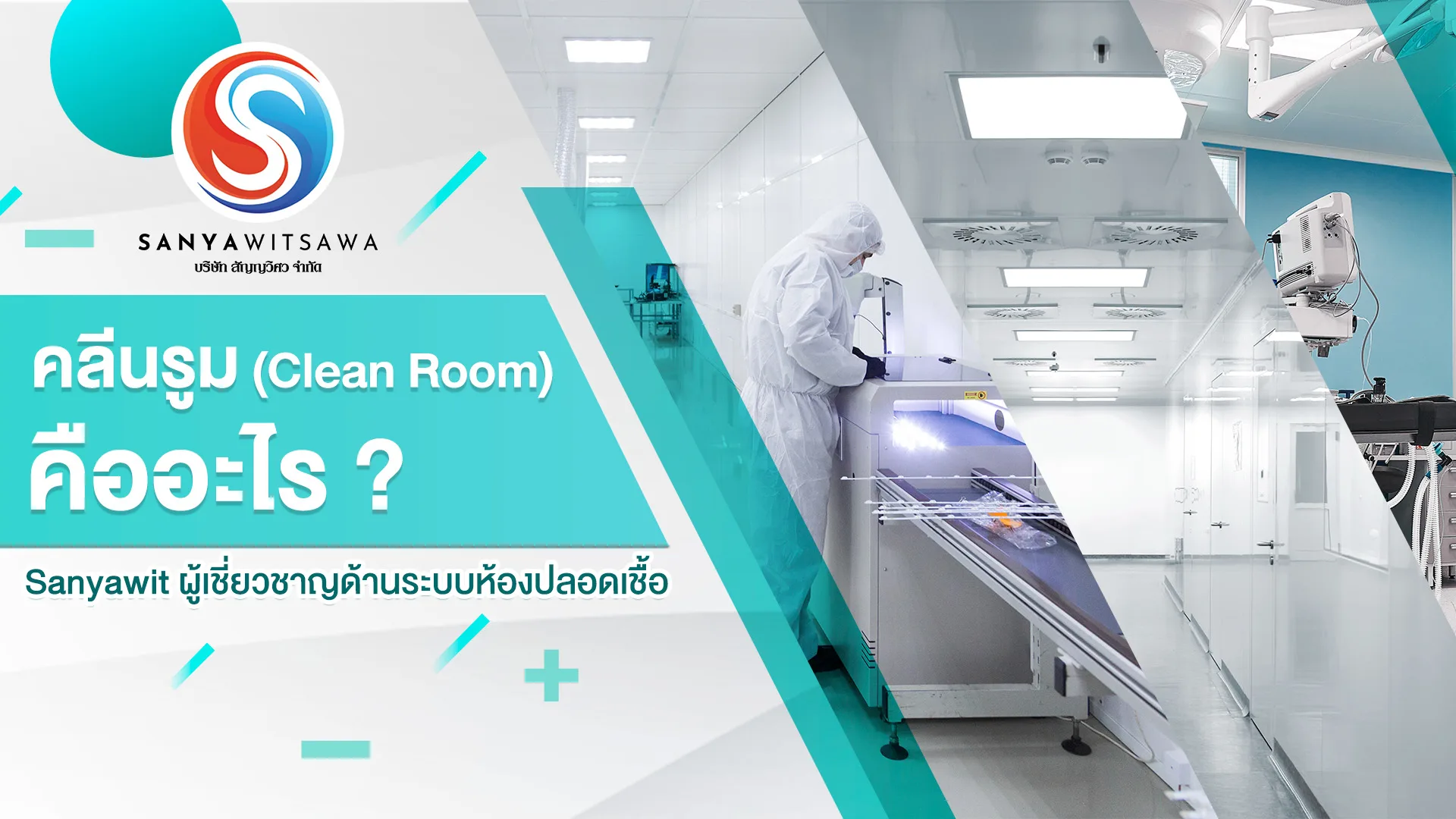
What Is a Clean Room? Sanyawit, the Specialist in Sterile Room Systems
A "clean room," "sterile room," or "contamination-controlled room" refers to a room in which the levels of particles, dust, and various contaminants are controlled so as not to exceed defined limits. Clean rooms are widely used in fields that must take special care with dust or pathogens, such as hospitals, food and pharmaceutical factories, electronic-component manufacturing plants, lens manufacturing plants, and so on — because in these industries dust is a formidable enemy that can damage the work pieces. They also involve controlling various supporting factors, including the characteristics and velocity of the air, the temperature, the pressure, and the relative humidity level within the room.
The clean room was first conceived and put into use in 1961 by Mr. Willis Whitfield, who defined it as a tightly sealed room in which airborne contamination is kept to a minimum.
So just how necessary is a clean room? What contaminants float in the air that our eyes cannot see? And where does each of them come from? In this article, Sanyawit will take everyone to find the answers together.
Why do we need clean rooms? Where do airborne pathogens and contaminants come from?
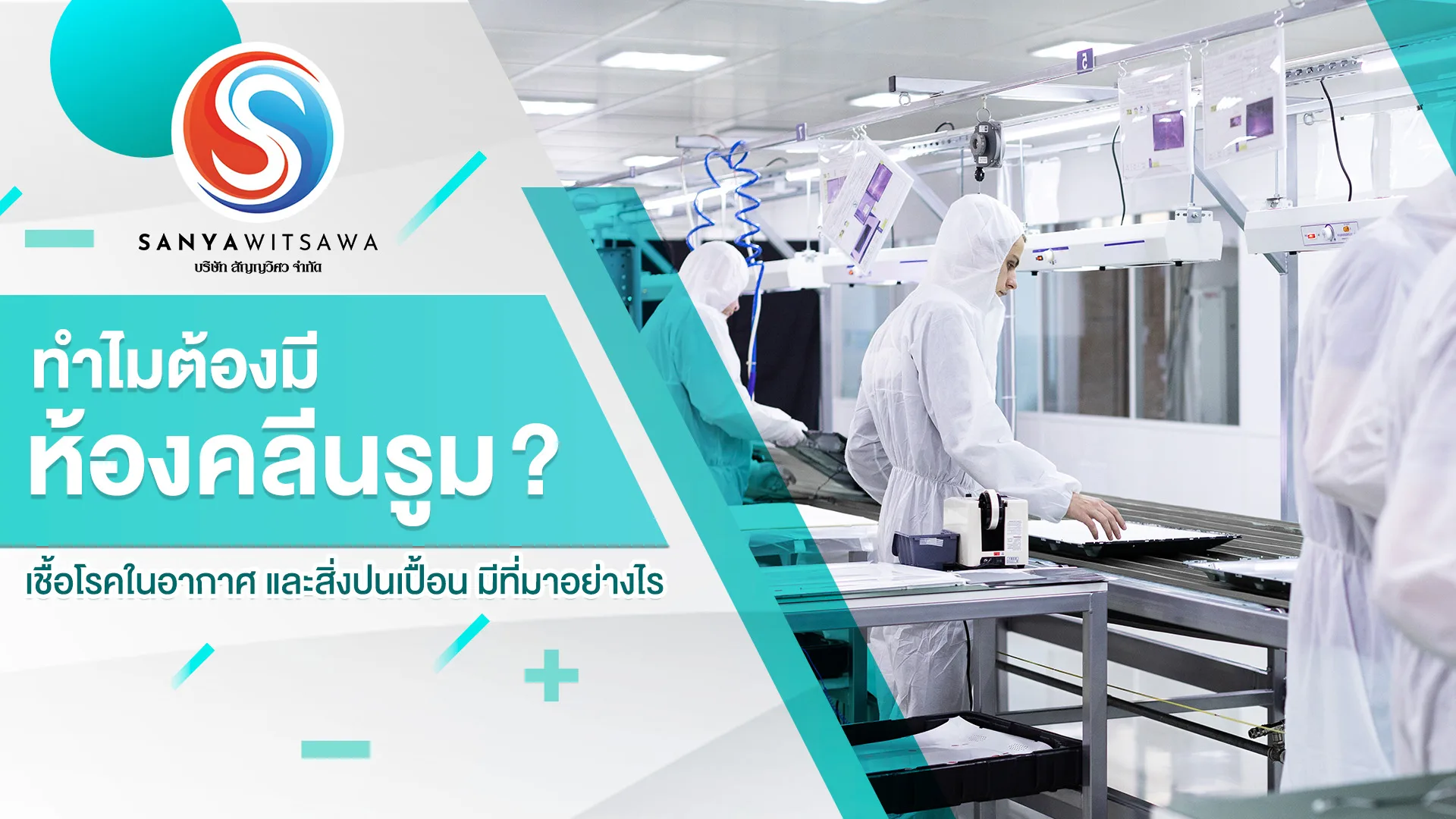
The sources of contaminants, dust, pathogens, and various small particles can be divided into two categories, as follows:
- External Sources
For the most part, the various contaminants that come from outside the room (External Sources) can slip into the working area inside the room through the supply air-conditioning system (Makeup Air, in the case of an AHU system), as well as by infiltrating through cracks or leaks in the room's walls, ceilings, and air ducts.
This problem can be controlled by:
Filtering the air with a special filtration system (HEPA Filtration)
Controlling the pressure between the area of interest (Critical Environment) and the external area (Space Pressurization)
Sealing cracks or leaks with silicone (Sealing of space penetrations)
- Internal Sources
Dust, small particles, and various contaminants (Contaminant) are most often carried in by the personnel working inside the room — whether from the clothes they wear, their shoes, hair, skin, or even from their own breathing. In general, the size of dust, contaminants, and small particles ranges from 0.001 up to several hundred microns. Particles larger than 5 microns are most often found on various surfaces and have a chance of remaining airborne only for short periods.
Clean Rooms and Today's Demand
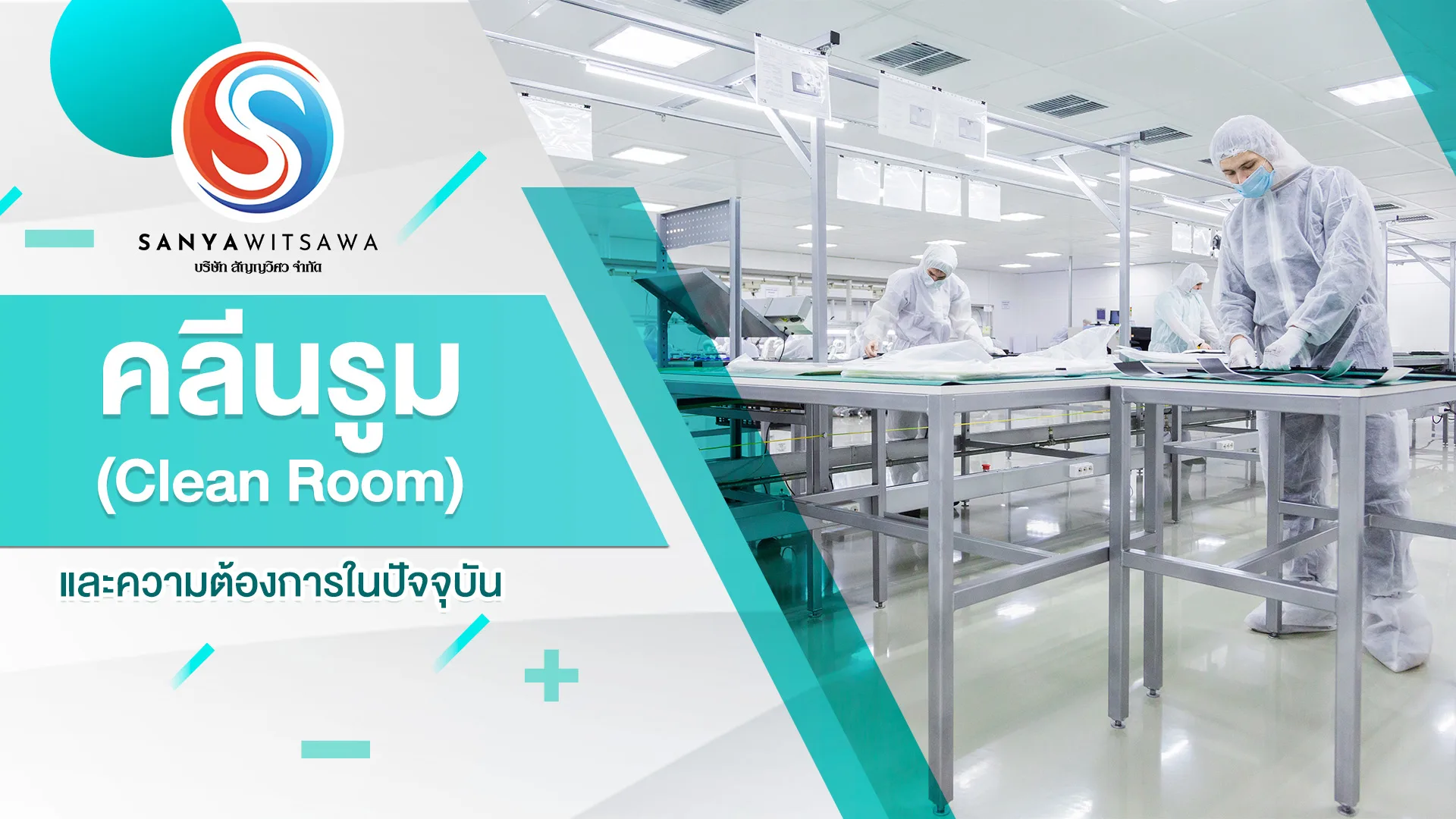
The demand for sterile rooms, clean rooms, or contamination-controlled rooms typically arises from problems of contamination by small particles, contaminants, and dust generated by operations, production processes, and outside air. All of these create problems for operations, health, and the quality of goods or products directly, which can render various activities ineffective. Moreover, a sterile room that meets the requirements of the Ministry of Public Health can also help control pathogens within patient rooms. It is well understood that a recovery room should not have other pathogens entering and contaminating it; otherwise, there is a risk of infecting the patient and causing their condition to worsen significantly. Even in the present day, with epidemic diseases such as Covid 19, a sterile room — or a negative-pressure room — can help with this as well.
For these reasons, clean rooms are important in many businesses and industries, whether medical institutions, hospitals, factories, recovery facilities, operating theatres, and many others, because they make it possible to fully maintain standards of production, service, and effective operation.
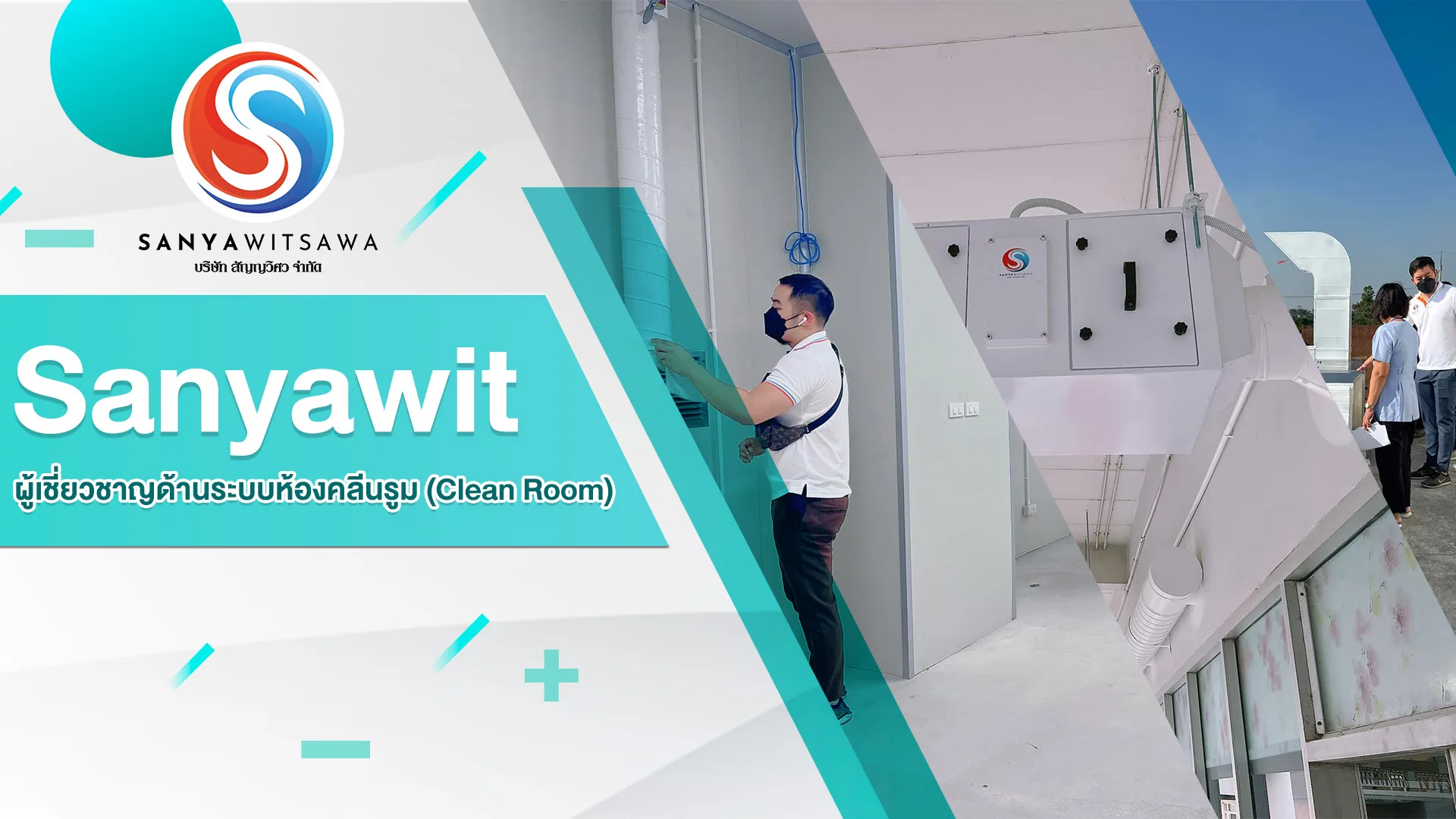
With more than 10 years of working experience, the Sanyawit team can confidently say that we are truly specialists in sterile clean-room systems — particularly in the installation and upgrading of dental-room and operating-theatre systems, which are the projects that have passed through our hands the most. We can tell you that we install them every single day, continuously: good work, fast work, and quality work, with several hundred rooms already completed by our team.
We guarantee clean rooms and safe air. Every tool and material we use is certified to the standards of the Ministry of Public Health, so you can be confident in both quality and performance.
Good prices, with performance that is worth more than the price, plus full consulting and after-sales service.
At Sanyawit, we are ready to raise the standard of sterile rooms, making them clean and safe to the level of leading hospitals nationwide. By introducing fresh air alternated with air circulation through a HEPA FILTER, we make the surrounding air clean rapidly, meeting requirements for both performance and operation in full.
Sanyawit provides design and installation of sterile rooms and clean rooms to the standard of leading hospitals nationwide.
When you think of effective contamination control and a highly experienced team, think only of Sanyawit.