
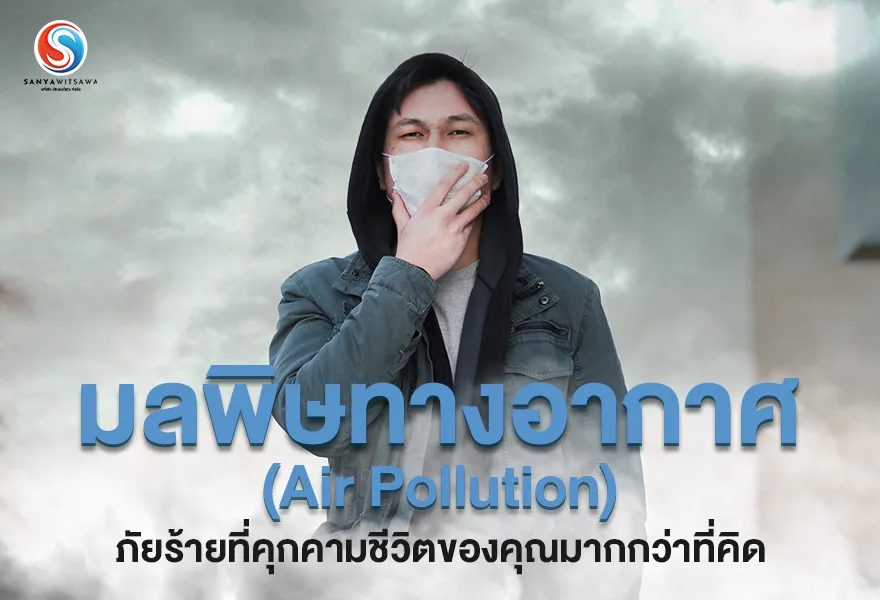
Air Pollution: A Hidden Threat to Your Life That Is Far Greater Than You Think
Air pollution means exactly what its name suggests: contaminants suspended in the air all around us, especially in densely populated or industrial areas. These pollutants are typically generated by exhaust fumes, industrial emissions, and combustion of all kinds, whether from forest fires, waste burning, chemical burning, or unexpected accidental fires.
Air pollution clearly has a direct impact on the respiratory system and on everyday quality of life. Beyond simply being a nuisance and leaving you feeling unrefreshed, inhaling these pollutants in large amounts or over a long period allows the toxic substances accumulated in smoke and particulate matter to gradually build up in the body. Over time, this becomes a contributing factor in various diseases and a visible cause of declining health, no matter how robust you were before. Air pollution genuinely affects people of every age group.
Let's take a closer look at just how profoundly air pollution can affect our everyday lives.
When it comes to clean-room systems built to internationally recognised standards, Sanyawit takes the cleanliness of every facility seriously. Drawing on our experience designing and installing clean rooms and sterile rooms for hundreds of rooms across leading hospitals and healthcare facilities, we are ready to raise the level of safety in every space with high-quality air-filtration systems that thoroughly control airborne pollutants and contaminants, creating sterile rooms that meet Ministry of Public Health standards.
For anyone who would like to learn more about sterile rooms, including how to control and maintain their standards, Sanyawit has gathered a wealth of useful information for you in this article. Let's explore it together!

Air Pollution and Dangers Far More Severe Than We Ever Imagined
The smaller airborne dust and pollutant particles become, the greater the threat they pose to health. Anything labelled "pollution" is bad, but airborne particulate pollution that is smaller still is truly dangerous to health, because it can be inhaled and is small enough to penetrate deep into the lungs and airways. Some particles may even reach the bloodstream and circulate throughout the entire body.
Thanks to major research studies over the past ten years, we now know that air pollution threatens our health far more than we once understood. The World Health Organization estimates that more than six million people worldwide die prematurely each year because of air pollution, and of these, around ten percent — roughly 600,000 — are children under the age of five. Research also shows that as air quality worsens, the rate of emergency-room visits and hospital admissions rises, because pollution aggravates existing health problems and triggers events such as heart attacks, strokes, asthma flare-ups, and many more.
A threat to the heart: Research has shown that exposure to air pollution can trigger acute, severe events affecting the heart muscle, including heart attacks, arrhythmias, an elevated heart rate, reduced heart-rate variability, and an increased risk of death from sudden cardiac arrest. Furthermore, recent evidence indicates a link between atherosclerosis and long-term exposure to fine particulate matter, as deposits accumulate within the blood vessels, which can lead to fatal heart attacks and strokes.
A threat to the lungs and airways: Air pollution is both a cause of, and an aggravating factor in, lung and respiratory diseases, which it can cause to flare up. These include asthma, chronic obstructive pulmonary disease, and lung cancer.
A threat to the brain: Long-term exposure to air pollution is believed to increase the risk of hardening of the brain's arteries, raising blood pressure and increasing blood viscosity — all of which are risk factors for blood clots in the brain.
Don't wait until it's too late to look for a solution, because addressing problems only at the symptom stage, or beginning to act once your health has already deteriorated and spiralled out of control, is always far harder than prevention from the outset.
Sanyawit is proud to present the HCU germ-control air purifier, an innovation designed for genuinely clean air. With filtration efficiency as high as 99.999% at 0.3 microns, it captures fine contaminants many times more effectively than ordinary air filters on the market, trapping dust, pollution, pathogens, bacteria, and tiny dirt particles that can cause disease.
In addition, the HCU air purifier delivers high airflow while running quietly at just 50 decibels, so it does not disturb work or daily life and can be installed in bedrooms or patient rooms without interfering with rest. Every HCU unit has been tested to hospital sterile-room standards by a third-party company, so you can be confident in its performance, delivering thoroughly clean air free of troublesome contaminants.
HCU by Sanyawit, the leader in clean air, certified to Ministry of Public Health standards.
If you're interested in owning one of our air purifiers, you can contact us at any time.