
Clean Air Systems by Sanyawit: Hospital- and Clinic-Grade Clean Air
Clean air systems by Sanyawit, delivering hospital- and clinic-grade air.
Hospitals and clinics rank among the environments most vulnerable to air-quality problems, because the activities involved in treating and caring for patients can drive the airborne spread of infection. They also rely on a wide range of chemicals for disinfection and instrument cleaning, as well as chemicals used in laboratories, pharmacy operations and elsewhere. Controlling air quality in a hospital is therefore essential, to prevent spaces that ought to be clean and safe — such as the various laboratories within the hospital — from becoming breeding grounds and transmission points for dangerous pathogens that would endanger both patients and every member of staff.
For this reason, managing and maintaining air quality in hospitals and clinics is a critically important factor that every healthcare facility should attend to. Air-quality control can be broken down into three broad areas, as follows.
What Does Good Air-Quality Control in a Healthcare Facility Look Like?
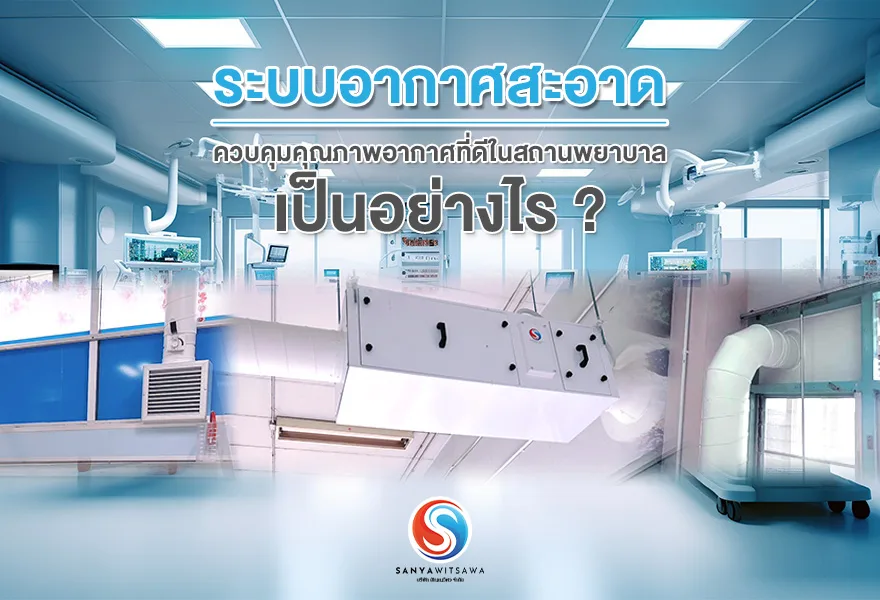
What does good air-quality control in a healthcare facility look like?
- Bringing Outdoor Air into the building
Introducing outdoor air into a room or building is intended to dilute the concentration of chemicals in the working atmosphere, or to reduce the concentration of pathogens dispersed as fine aerosol particles (the Dilution Principle). How much air is brought in depends on the level of internal contamination and the degree of air cleanliness required. Operating theatres and delivery rooms, for example, demand very clean air to prevent infection, and so must draw in no less than 5 times the room volume per hour (5 Air Changes per Hour; ACH), whereas patient rooms should take in no less than 2 times the room volume per hour.
Conversely, before bringing in outdoor air to dilute indoor pollutants, the cleanliness of the outdoor air itself must first be considered. Hospitals located in areas of heavy traffic, in particular, may sit in air contaminated with fine particulate matter or substances emitted in vehicle exhaust; drawing that air into the building could actually worsen the indoor air-quality problem. A thorough assessment by a specialist should therefore be carried out before any work is undertaken.
- Removing pathogens from the indoor air
Every activity inside a hospital increases the risk of airborne pathogens and contaminants being dispersed. Pathogens can be removed from the building interior by increasing the rate of air recirculation through the air-conditioning and ventilation system. This step requires the installation of air filters of appropriate efficiency, because as a greater volume of air is recirculated through the filter bank, more suspended pathogens are filtered out of the airstream. Studies have found that 99.4% of the bacteria found in hospitals are typically larger than 1 micron and can be removed by air filters with an efficiency of 90–95% (per the filter-testing standard ASHRAE Standard 52.1).
That said, rooms requiring very high cleanliness should use HEPA (High Efficiency Particulate Air Filter) filters, which capture particles 0.3 micron in size at an efficiency of up to 99.999%. Research has also shown that the quantity of pathogens spread within a building correlates with the number of people inside it; hospitals serving large numbers of visitors may therefore consider raising both the ventilation rate and the filter efficiency accordingly, for better screening performance.
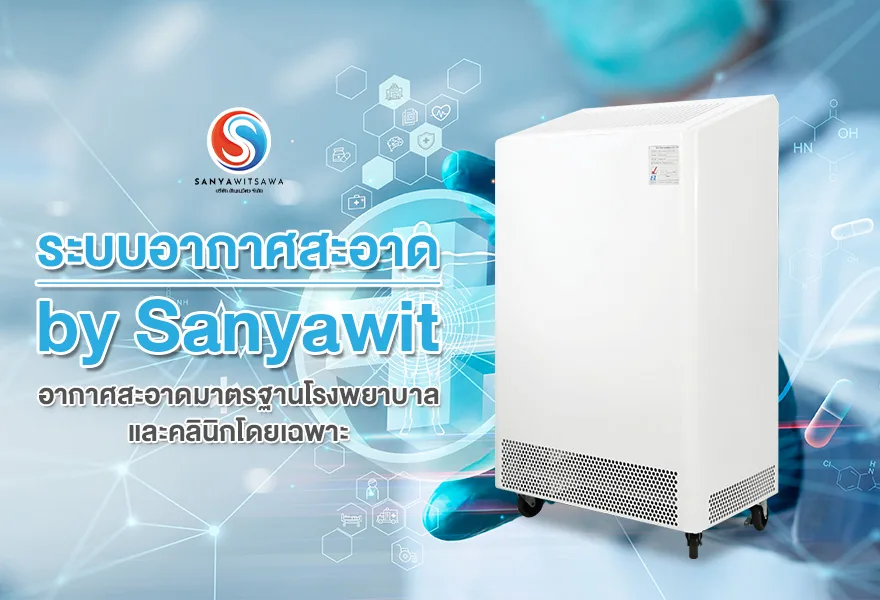
Here, the HEPA filter in the HCU can assist in removing pathogens from the building, because the HCU air purifier offers a filtration grade as high as H14 — an extremely high rating that is exceptionally well suited to hospital use, capturing particles down to 0.003 micron, or a cleanliness rate of up to 99.999%. It traps viruses, bacteria, mould, smoke and aerosols of every kind, demonstrably protecting the health of everyone in the facility.
- Controlling the direction of airflow
Controlling the direction of airflow is a key measure in managing indoor air quality. It is achieved by directing air to flow from cleaner areas toward less clean areas before being exhausted from the building or recirculated back into the system, and is accomplished by creating pressure differentials between rooms. To control airflow direction for an infectious-isolation room, for instance, air should be directed from outside the room or from other, less contaminated areas into the isolation room — where the air is highly likely to be contaminated by the patient, or to be heavily soiled — while contaminated air within the room is exhausted to the outside of the building. These steps depend on appropriate air-pressure differentials, and engaging a more highly specialized contractor such as Sanyawit to assist with the design is therefore a sound option.
Why use a specialist? Because pressure is an extremely delicate variable that can change all too easily if mistakes are made during design and installation — whether a leak, an air gap, a doorway opening, the building envelope, and much else — any of which can alter the air pressure and, in turn, affect the direction of flow.
So if you want to control airflow direction effectively, do not forget to have a specialist carry out the inspection in person, for the best possible directional control with the least possible disruption.
That said, the various areas of a hospital differ from one another, so the air-conditioning and ventilation systems must be tuned to suit how each space is used and the specific air-quality issues it faces, and the system's operation must be inspected regularly to ensure it continues to control air quality without interruption. Adapting the air-conditioning and ventilation systems appropriately to the functions of the various hospital areas is a vital element in controlling indoor air-quality problems, so as to ensure the lasting safety of both medical staff and visitors.
Design and installation of clean-air systems for hospitals, to Ministry of Public Health standards
Sanyawit is a team with genuine expertise and experience in installing sterile-room, clean-room and cleanroom systems, as well as truly high-quality air systems. We provide sterile-room and cleanroom installation services for hospitals, clinics, dental rooms and healthcare facilities of every kind, screening out unseen contaminants invisible to the naked eye with complete thoroughness. Our long-accumulated experience has made us specialists in clean-air improvement and sterile-room systems for healthcare facilities in particular, organized by type of work as follows:
- Consult: advising on a design that matches the user's exact requirements.
- Design: designing in full compliance with Ministry of Public Health standards.
- Supply: selecting equipment appropriate to the desired design.
Guaranteed by a portfolio of more than 600 rooms in hospitals nationwide, as well as a client base that includes private companies, industrial plants and residences. Sanyawit's air-system installation service covers everything from receiving information from the client, conducting the initial site survey, and analyzing the root causes of the problem, to selecting the correct and appropriate solution, designing equipment that comprehensively supports that solution, and overseeing the installation and system testing to meet installation standards. In short, every step is completed in one place.
"Sanyawit: worth more than its price — clean, safe, and dependable at every step of the work."
For clean air, effective pathogen control and a highly experienced team, there is only Sanyawit.
To enquire about or arrange a clean-air system installation with Sanyawit, you can contact us at any time.