
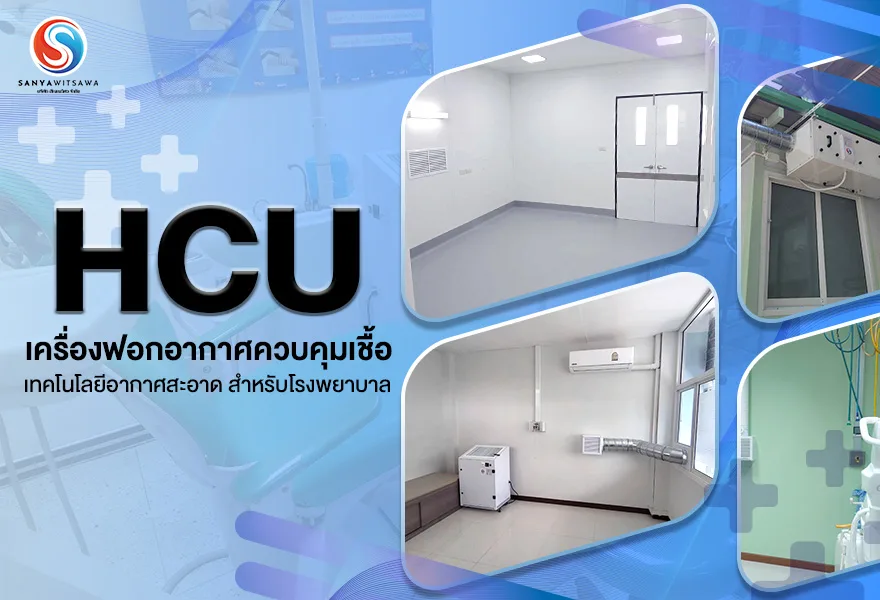
Contamination-Control Air Purifier: Clean-Air Technology for Hospitals
Contamination-control air purifier with clean-air technology for hospitals. As everyone knows, hospitals, clinics, and other healthcare facilities are places that must maintain extremely high standards of cleanliness, because patients are coming and going at all times. If neglected — without serious cleaning and contamination control — there is a chance these places could become breeding grounds for pathogens. And if that were to happen, fixing the problem after the fact would inevitably be more troublesome and costly than preventing it and controlling pathogens early on.
This is especially true in various medical operating areas — whether disease-screening rooms, dental rooms, operating theatres, X-Ray rooms, patient wards, and others — which should have rigorous control of pathogens and air pollution, to prevent those airborne contaminants from affecting patients as well as the doctors and nurses working in the area, and to make operations run more smoothly.
For this reason, the "HCU contamination-control air purifier" is a choice that should not be overlooked.
How to Reduce PM 2.5 Dust in the Home
- Close doors and windows tightly
During periods when dust blankets the whole city like this, while inside the house or building you should close the doors and windows tightly to keep dust from blowing in. For homes with air conditioning, set the air conditioner to recirculate indoor air rather than drawing air from outside, and clean the air-filtration system regularly. For homes using fans, blow the air down across a water surface first, which is another way to help reduce dust.
- Clean the house regularly
You should also clean the house regularly and consistently — dirt, dust, and mold on ceilings and walls alike — using a well-wrung damp cloth or a mop to wipe down household items and floors, which is preferable. Try to avoid using a vacuum cleaner, because vacuuming causes dust to disperse even more.
- Avoid activities that generate dust and smoke
If you don't want indoor dust and smoke to build up, avoid activities that produce smoke or dust, such as grilling, cooking on a charcoal stove, lighting incense and candles, burning waste, and smoking cigarettes.
- Grow plants indoors
Growing plants indoors is another way to help reduce indoor air pollution — for example, lady palm, peace lily, English ivy, Ixora, and Chinese evergreen. However, you should research each type of plant carefully before growing it, as some plants can be harmful to young children and pets. Growing plants indoors also has another benefit: watering them frequently helps reduce dust and adds humidity to the air.
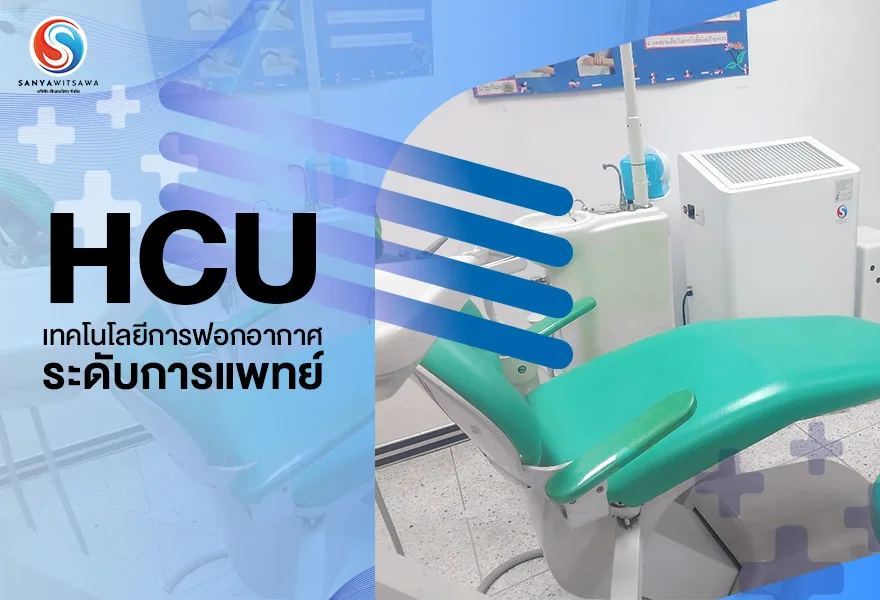
- Use the HCU contamination-control air purifier
And the most important method, not to be overlooked, is to find a means of filtering clean air inside the home — to quickly reduce airborne dust while circulating and ventilating the air indoors, keeping it clean and fresh at all times.
The HCU by Sanyawit is considered the highest-performance air purifier available today, capable of filtering out pollution, PM 2.5 dust, pathogens, bacteria, dirt, and the various tiny particles mixed into the air — completely. As an air purifier fitted with a HEPA Filter at the grade of leading hospitals, you can be confident that the air passing through the HCU air purifier will be clean and pure, far removed from contaminants — guaranteed by our experience installing clean-air systems in leading hospitals, clinics, and healthcare facilities nationwide, meeting every clean-air need in a single unit.
As you can see, none of these methods is at all complicated. As long as your home has a standard-grade air filtration aid, paired with regular cleaning and a few small adjustments to the surroundings of your home, the dust problem that troubles you will surely diminish — and you'll also better reduce the risk of the serious diseases that come with air pollution. Once you've read this, try putting it into practice in your own home.
HCU by Sanyawit, the leader in clean air, built to Ministry of Public Health standards.
If you are interested in owning an air purifier, you can contact us at any time.
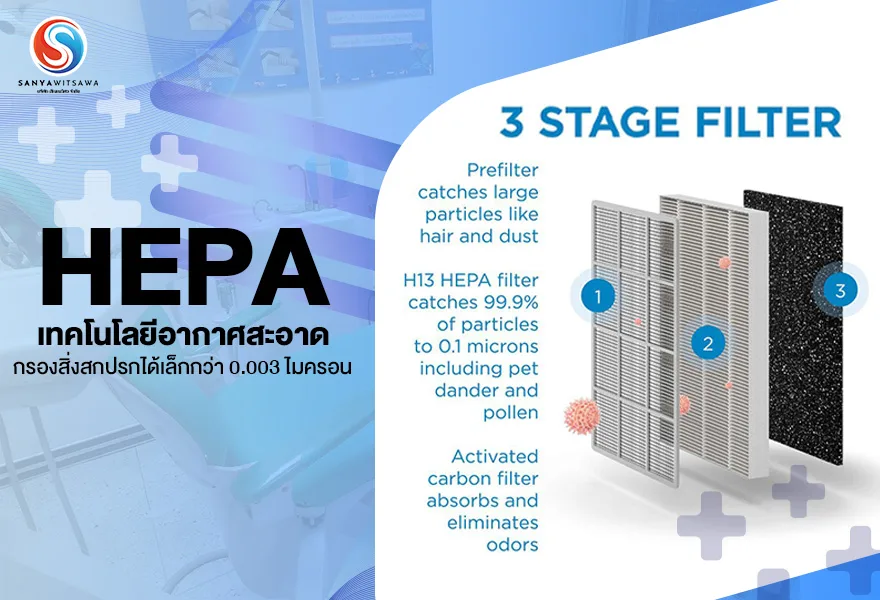
HEPA: Clean-Air Technology That Filters Contaminants Smaller Than 0.003 Microns
The HEPA filter in the HCU achieves a filtration grade as high as H14, a high level that is exceptionally well suited to aseptic rooms, with particle-capture performance down to 0.003 microns — a cleanliness rate of up to 99.999%. It also captures viruses, bacteria, mold, smoke, and droplets of every kind, protecting the health of those in healthcare facilities. It is considered the highest-performance filter in the field of air filtration.
In addition, the HCU air purifier delivers high airflow yet runs quietly at just 50 decibels, so it causes no disturbance and can be installed in a laboratory or a patient's room without disrupting rest. Every HCU unit has passed third-party hospital aseptic-room standard testing, so you can be confident in its performance — cleaning the air thoroughly and leaving no contaminants behind to trouble you.
- HCU250 — suitable for rooms of 39-52 sq.m.
Noise level 50 decibels — does not disturb daily living
H13 HEPA Filter Class, filtration efficiency 99.95%
- HCU420 — suitable for rooms of 40-80 sq.m.
Noise level 50 decibels — does not disturb daily living
H14 HEPA Filter Class, filtration efficiency 99.99%
- HCU530 — suitable for rooms of 50-100 sq.m.
Noise level 50 decibels — does not disturb daily living
H14 HEPA Filter Class, filtration efficiency 99.99%
- HCU830 — suitable for rooms of 75-150 sq.m.
Noise level 50 decibels — does not disturb daily living
H14 HEPA Filter Class, filtration efficiency 99.99%
Because airborne contaminants are far more delicate a matter than many people realize, and cannot be seen with the naked eye, having a means to control and screen out contaminants in healthcare facilities is an important consideration that should not be overlooked — for the safety of those receiving care and of the staff working in the facility.
HCU by Sanyawit, the leader in clean air, built to Ministry of Public Health standards.
If you are interested in owning an air purifier, you can contact Sanyawit at any time.