
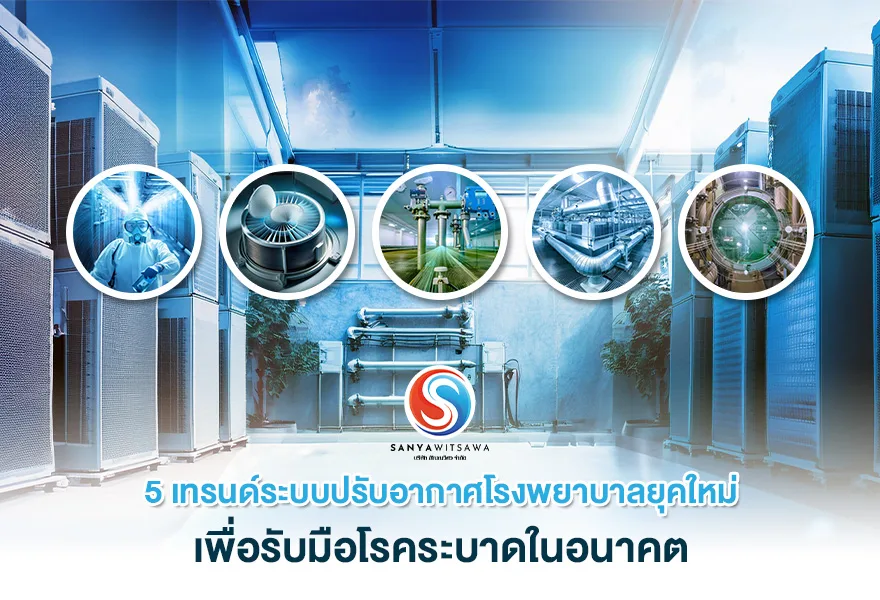
5 Air-Conditioning Trends for the Modern Hospital to Counter Future Epidemics
5 air-conditioning trends for the modern hospital: the outbreaks of various communicable diseases over the past few years have underscored the importance of efficient, safe air-conditioning systems in hospitals as a way to meet the hygiene challenges that may arise in the future. Hospital air-conditioning technology is therefore developing continuously, with a focus on disinfection, advanced air filtration and humidity control. This article explores 5 air-conditioning trends in the modern hospital that are gaining popularity and hold real potential to prevent the spread of pathogens.
- Air Disinfection Technologies — disinfection technology within the air-conditioning system is central to reducing the risk of airborne disease transmission within the hospital. Noteworthy technologies include:
- UV-C germicidal lamps emit Type C ultraviolet radiation, which can destroy the DNA and RNA of pathogens so that they can no longer multiply and spread.
- PCO (Photocatalytic Oxidation) technology uses UV light together with a catalyst to generate free radicals that effectively destroy organic matter and airborne pathogens.
- Plasmacluster technology generates positively and negatively charged particles that inhibit pathogens and break down unpleasant odours.
- Advanced Air Filtration — air filtration is another key factor in maintaining air quality in the hospital. The HEPA filter (High Efficiency Particulate Air filter) is well known for its efficiency in filtering fine particles such as bacteria and viruses, but today there are even more advanced filtration technologies, such as:
- ULPA filter (Ultra Low Penetration Air filter) — offers higher filtration efficiency than a HEPA filter and can filter particles as small as 0.12 microns.
- Electrostatic HEPA filters — use static electric charge to capture particles, providing high filtration efficiency while reducing the pressure drop across the filter.
- Carbon Filter — helps adsorb odours and hazardous gases such as volatile organic compounds (VOCs).
- Humidity Control — the relative humidity of the air affects the survival and spread of pathogens. Modern air-conditioning systems therefore place great importance on keeping humidity at an appropriate level, using technologies such as:
- Intelligent humidity-control systems — automatically adjust the humidity level according to the weather and the needs of the space.
- Humidifiers — used in rooms with dry air to raise humidity to an appropriate level.
- Dehumidifiers — used in rooms with humid air to reduce humidity to an appropriate level.
- Proper Ventilation Design
Dilution ventilation — brings fresh outdoor air in to mix with the air inside the room, reducing the concentration of pathogens and contaminants.
Displacement ventilation — introduces fresh air to replace the room air from the bottom upward, helping reduce the dispersal of pathogens.
Air-pressure systems — control the air pressure in each room appropriately to prevent the spread of pathogens between rooms.
- Smart Control Systems — intelligent control systems make it possible to monitor and control the operation of the air-conditioning system more efficiently and precisely, using sensors to detect air conditions and equipment performance, and sending data to a central control system for analysis and optimisation.
- Zoning temperature control — divides the hospital into zones and controls the temperature of each zone independently, saving energy and improving comfort.
- Remote monitoring and control — allows the air-conditioning system to be monitored and controlled via smartphone or computer, anytime, anywhere.
- Data analysis — uses data from sensors and control systems to analyse and improve the performance of the air-conditioning system.
Modern hospital air-conditioning technology plays a vital role in creating a safe, hygienic environment for patients, medical staff and visitors. Adopting disinfection technology, advanced air filtration, humidity control, intelligent air-conditioning and proper ventilation design helps reduce the risk of pathogen spread and effectively prepares hospitals for future epidemics.
Sanyawi — specialists in air-conditioning and sterile rooms
Sanyawi has the expertise to design, install and maintain air-conditioning systems and sterile rooms for hospitals. With a team of specialist engineers and many years of experience, we are ready to provide consultation and service to help ensure your hospital has clean, safe, standards-compliant air, using the most up-to-date technology to meet the hygiene challenges of the future.
Sanyawit, a leader in clean air to Ministry of Public Health standards. If you are interested in our services, you can contact Sanyawit at any time.