
Allergies and Air Pollution: Health Impacts That Go Beyond Allergic Symptoms
Allergies and air pollution: health impacts that go beyond allergic symptoms.
How are allergic disease and air pollution related? As many people are well aware, "air pollution" is an environmental problem that has a major impact on human health, especially for those with allergic disease and other respiratory conditions. Understanding the effects of air pollution and how to protect yourself from it is therefore important.
PM2.5 dust greatly affects people with allergic disease and is a primary factor that triggers or worsens allergy symptoms, affecting the overall health of allergy patients, because airborne impurities trigger inflammation that penetrates deep into both the upper and lower respiratory tract, which affects respiratory allergies and skin allergies. Inhaling impurities over a long period causes inflammation in the upper respiratory tract, such as allergic rhinitis, sneezing, runny nose, and nasal congestion, and may extend to sinusitis, while lower-respiratory inflammation involves the bronchi and alveoli. In addition, PM 2.5 dust is also linked to asthma. There is information from reliable sources stating that when the body receives a large amount of PM2.5 over a long period, it makes patients more readily allergic to existing allergens and can develop new allergies, which worsens allergic rhinitis and asthma flare-ups to a worrying degree.
From detailed study of health information, PM 2.5 dust can cause inflammation in 2 forms, namely:
Acute inflammation – Acute inflammation usually occurs rapidly after our body is exposed to PM2.5 particles in the air. When inhaled, those PM2.5 particles penetrate very deep into the lungs and airways, causing irritation and damage to delicate tissue. This prompts the body to respond with immediate inflammation, with symptoms such as coughing, wheezing, difficulty breathing, bronchoconstriction, and increased phlegm. Inflammatory cells such as neutrophils and macrophages are dispatched to the sites where impurities have accumulated in the body and release inflammatory mediators such as cytokines and free radicals. This acute inflammatory response is the body's attempt to remove foreign particles and repair tissue damage.
Chronic inflammation – When PM2.5 dust is received over a long period, the lungs remain in a continuous state of low-grade inflammation. The alveolar macrophages, which normally clear inhaled particles, are disrupted, and their function in removing foreign matter from the body is impaired. This causes PM2.5 to remain in the lungs and continue to cause tissue injury. Over time, this prolonged inflammatory response leads to structural changes in the airways, such as fibrosis and a decline in lung function, leading to chronic bronchitis and pneumonia, as well as triggering more frequent flare-ups of chronic respiratory diseases such as asthma and chronic obstructive pulmonary disease (COPD).
The two forms of inflammation are caused by the small particles of PM2.5 dust that can penetrate deep into the respiratory system as far as the alveoli, causing irritation and triggering an inflammatory reaction in the body, harming respiratory health both in the short and long term. Especially in those with pre-existing respiratory diseases such as allergies and asthma, the risk of disease flare-ups from PM2.5 dust is greater than for the general population, so they should be more careful than others at the same time. Reducing exposure to PM2.5 is therefore important to prevent both short-term and long-term inflammatory effects on respiratory health.
And for prevention and treatment for those with allergic disease during periods of high PM2.5 dust, there are also various basic methods, including checking the Air Quality Index before leaving home, wearing a standard N95 mask, which can best help protect against PM2.5 dust, rinsing the nose daily in the proper way to keep the nasal cavity clean and reduce the chance of infection and disease, regularly cleaning the living area and keeping fresh air circulating at all times, as well as using an air purifier with a HEPA Filter so that air filtration is finer than that of an ordinary air filter, blocking allergens very well.

How to Deal With Allergy Symptoms Caused by Air Pollution
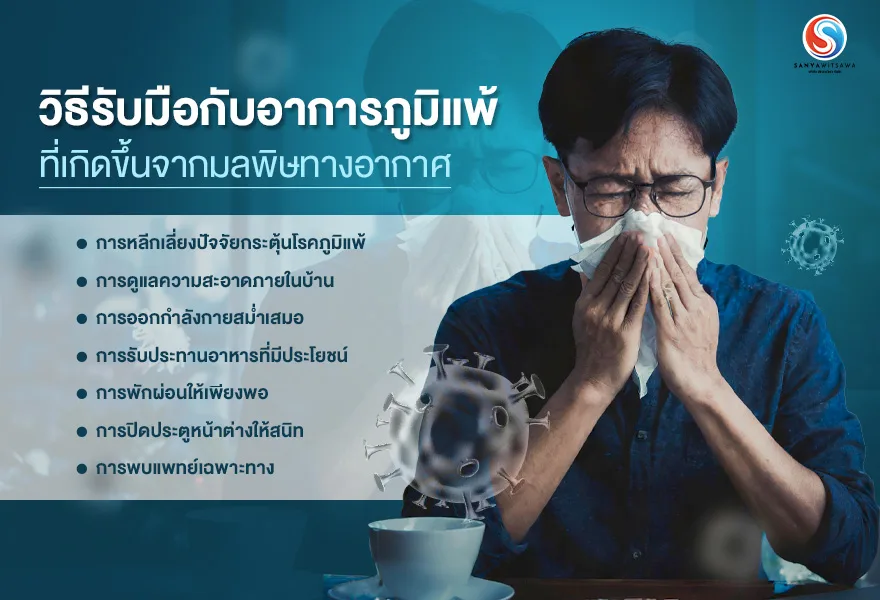
Dealing with allergy symptoms caused by air pollution is something that must be taken very seriously, because air pollution can easily trigger the symptoms of allergic disease to flare up. Therefore, having appropriate coping methods is necessary to help reduce the impact on health and quality of life. The following are approaches to dealing with allergy symptoms caused by air pollution.
Avoiding triggers of allergic disease: The first and most important thing is to avoid the various factors that cause allergies, whether dust, vehicle smoke, cigarette smoke, incense smoke, strong perfume scents, and various chemicals, which are the primary causes of allergy flare-ups. Avoiding these will help reduce the chance of allergic reactions.
Maintaining cleanliness inside the home: Keeping the home clean is another important way to prevent allergy symptoms. You should change bed sheets and pillowcases at least once a week to reduce dust retention, and you should frequently clean damp areas to prevent the growth of mold, which is another cause of allergies.
Exercising regularly: Regular exercise not only helps keep the body strong but also helps the immune system function better. Exercising at least 30 minutes a day, 2-3 times a week, helps the body have a strong immune system and helps improve allergy symptoms.
Eating nutritious food: Eating nutritious food such as protein, vegetables, and fruit helps boost the body's resistance, which is important in fighting allergy symptoms.
Getting enough rest: Getting enough rest helps the body's immune system repair, restore, and rebalance fully, which is important in preventing and treating allergy symptoms.
Closing doors and windows tightly: To prevent dust from slipping into the building, and avoiding keeping any furred pets at home to reduce the chance of allergic reactions.
Seeing a specialist: You should consult a doctor to use medication as diagnosed by the doctor and strictly follow the doctor's instructions, so that the symptoms of the disease improve in turn and do not flare up severely again.
Following these recommendations helps reduce and prevent the symptoms of allergic disease from flaring up or worsening, allowing you to look after yourself and stay far from airborne allergies. On the other hand, if the air around us is still full of impurities hovering over us all the time, it will be hard to cure the symptoms of allergic disease or other respiratory diseases, because there are impurities constantly triggering allergic reactions and inflammation. Therefore, living in a good environment with sufficiently clean air is a very important factor in dealing with allergy symptoms over the long term.
And to meet needs in this regard, our Sanyawit would like to present a way to make the air around you sustainably clean, for better health for you and those you love, as well as visibly raising your quality of life.
Sanyawit installs clean-air systems in the home, protecting you from allergies and inflammation
Having a clean-air system inside the home is important to help residents stay healthy and safe from air pollution, including PM 2.5 dust that may cause various health problems. The indoor clean-air system has a working system to help filter and improve the air quality inside the home.
Main components of an indoor clean-air system
Air filter: A clean-air system usually has an air filter with multiple filtration layers, which can filter dust as small as 0.3 microns, as well as pollen, mold, bacteria, and allergens very well.
Positive air-pressure system: Creating positive air pressure inside the home helps clean air from outside flow in and push stale air out, preventing dust and pollution from outside from flowing back in through leaks.
Air-circulation system: This system helps keep the air inside the home constantly circulating, helping residents breathe more easily and also reducing dampness as well as foul odors very well.
Heat Exchanger: This device helps maintain a constant indoor temperature by exchanging heat between the indoor and outdoor air.
Ionizer system: This system helps eliminate particles and carcinogens in the air, making the air we breathe in of better quality.
Choosing a clean-air system suited to your home helps you and your family stay far from air pollution and breathe comfortably. It also helps reduce the risk of respiratory diseases and allergies that may arise from air pollution. But if you do not know where to start or what to install, Sanyawit is ready to help.
Our Sanyawit offers a comprehensive service for designing, installing, and consulting on indoor clean-air systems. To explain simply, Sanyawit's system is an indoor air-quality management system that creates good-quality, clean, and safe air to the same standard as clean rooms in leading hospitals, through the operation of germ-control air-purification equipment such as the HCU, which helps filter good air into the home from the very first step by creating Positive Pressure, so that stale air is pushed out through the various gaps of the home, making it impossible for outdoor pollution to enter the home. This is an operating principle different from ordinary air purifiers, to ensure that the air inside the home is of good quality, clean, and safe from PM 2.5 dust as well as pathogens, bacteria, and various viruses in the truest sense.
Beyond the quality of air and impurity filtration, another thing Sanyawit greatly cares about is "beauty." We have a skilled team to help design and install the indoor clean-air system to achieve a beautiful position that is not cluttered or an eyesore, because we believe no homeowner would want their own home to look cluttered and unattractive after installing a clean-air system, right? Therefore, Sanyawit takes care with every design and installation, prioritizing good-quality impurity filtration while also being beautiful and not an eyesore, so you can be fully confident that once installed, your quality of life and living conditions will certainly improve.
"Because your every breath is precious."
If you are interested in learning more or would like to use the clean-air system installation services of Sanyawit, you can contact us at any time.