
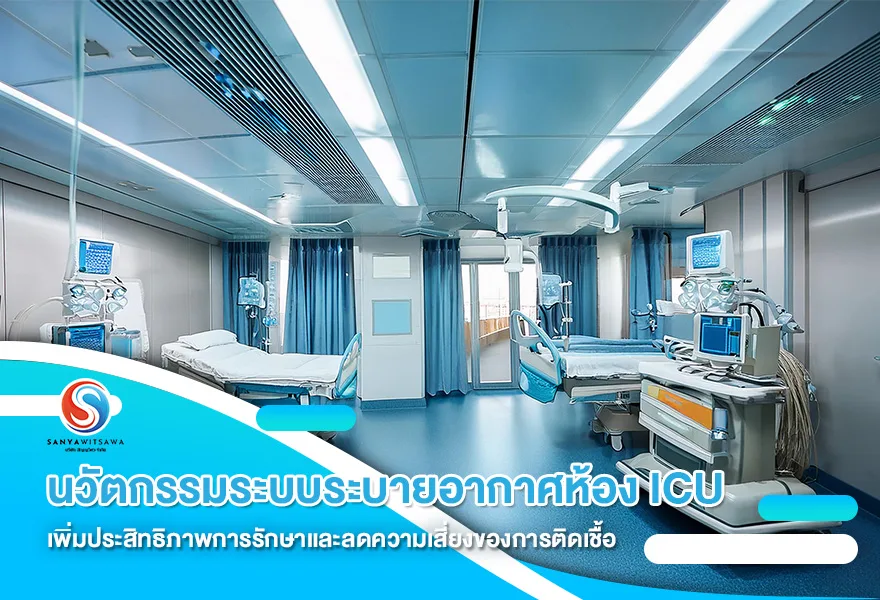
Innovations in ICU Ventilation: Improving Care and Reducing Infection Risk
Innovations in ICU (Intensive Care Unit) ventilation address one of the hospital's most critical areas — the unit that cares for patients in critical condition who require close, continuous attention. A highly efficient ventilation system is therefore essential to creating a safe environment suitable for patient care. This article explores ICU ventilation innovations focused on airflow control, HEPA air filtration and noise reduction, all aimed at elevating care and reducing the risk of infection.
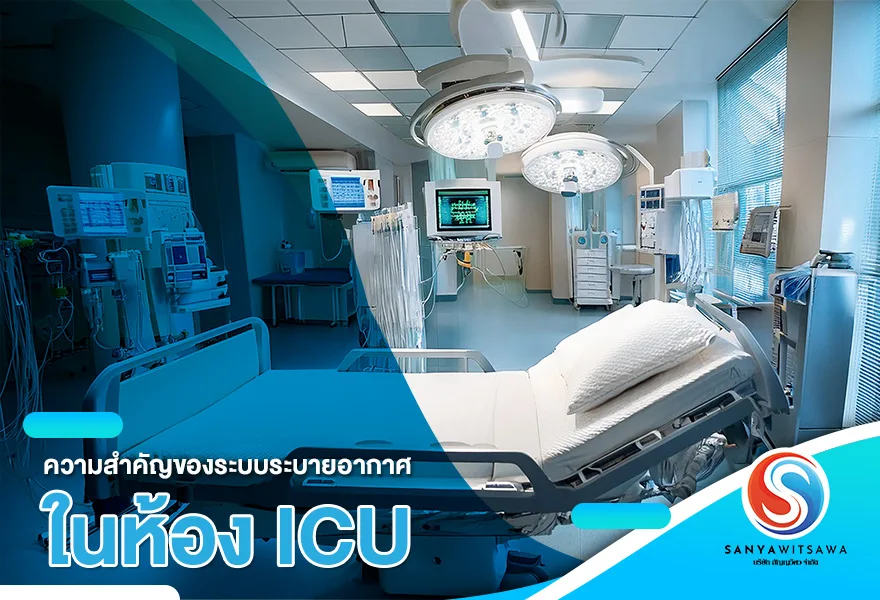
The Importance of Ventilation in the ICU
The ICU is a high-risk area for the spread of pathogens, because patients often have weakened immune systems and depend on medical equipment that can become a reservoir for germs. An efficient ventilation system therefore plays a key role in:
- Controlling the spread of pathogens — by filtering the air and controlling the direction of airflow to prevent transmission between patients and medical staff.
- Maintaining air quality — by removing dust, allergens and other contaminants so that the air within the room is clean and pure.
- Creating an environment conducive to treatment — by keeping temperature and humidity at appropriate levels to support patient recovery.
ICU Ventilation Innovations
1. Airflow Control
- Laminar Airflow delivers air in a single, parallel direction throughout the room, reducing the mixing of potentially pathogen-laden air and preventing the spread of germs.
- Displacement Ventilation supplies cool, filtered air into the room from below; the cool air pushes warm air and contaminants upward and out of the room through the exhaust vents.
2. HEPA Air Filtration (High-Efficiency Particulate Air Filtration)
- HEPA Filter — a highly efficient air filter that captures fine particles such as bacteria and viruses.
- ULPA Filter (Ultra-Low Penetration Air Filter) — offers higher filtration efficiency than a HEPA Filter and can capture particles as small as 0.12 microns.
- Installing HEPA Filters in the right locations — such as at supply-air outlets, return-air intakes and on portable air purifiers.
3. Noise Reduction
- Ductwork and equipment design — select low-noise materials and equipment.
- Acoustic insulation — helps reduce noise from both outside and within the air-conditioning system.
- Noise-reduction technology — such as Active Noise Cancellation (ANC) or sound-masking techniques.
Benefits of ICU Ventilation Innovations
- Reduced infection risk — by controlling the airborne spread of pathogens.
- Improved air quality — by reducing exposure to allergens and other irritants.
- A calmer, quieter environment — helping patients rest fully and reducing stress.
- Greater efficiency for medical staff — a better working environment reduces fatigue and improves concentration.
Selecting an ICU Ventilation System
Choosing the right ICU ventilation system depends on many factors, such as the size of the room, the number of patients, the budget and other specific requirements. You should consult air-conditioning and ventilation specialists to select a system that matches your needs and the hospital's standards.
Real-World Applications
- Many hospitals in Thailand have adopted Laminar Airflow and Displacement Ventilation systems in their operating theatres and ICUs.
- Installing HEPA Filters and ULPA Filters in air-conditioning systems is a standard practice followed by most hospitals.
- Noise-reduction technology is increasingly being incorporated into the design and construction of ICUs.
ICU ventilation innovations play a vital role in raising both the quality of care and patient safety. Airflow control, HEPA air filtration and noise reduction are key factors that hospitals should prioritise when designing and installing ventilation systems.
Sanyawit offers clean-room upgrade services that bring facilities up to the standards required by the Ministry of Public Health and leading hospitals. This covers everything from the airborne-contamination control system to full room renovation — walls, ceilings and more — in order to raise the standard of contamination control to an even higher level of performance.
With more than 10 years of experience and over 600+ completed rooms — including dental rooms, emergency rooms, patient isolation rooms, operating theatres, patient wards, delivery rooms and even gross-anatomy (cadaver) rooms — you can have complete confidence in our standard of work, which we organise by scope as follows:
- Consult — advising on design to match users' requirements as closely as possible.
- Design — designing in full compliance with Ministry of Public Health standards, with proper certification.
- Supply — selecting equipment for maximum performance, appropriate to the application.
Sanyawit's services cover the following areas:
- Hospital & Healthcare
- Commercial & Residential
- Industrial
as well as many other spaces — even residences — that require thorough control of pathogens and pollutants, all delivered to the same standard at every site: safe, dependable and certified clean.
Sanyawit designs and installs clean rooms, sterile rooms and clean rooms to the standards of leading hospitals nationwide. When you think of effective contamination control from a highly experienced team, look no further than Sanyawit.