
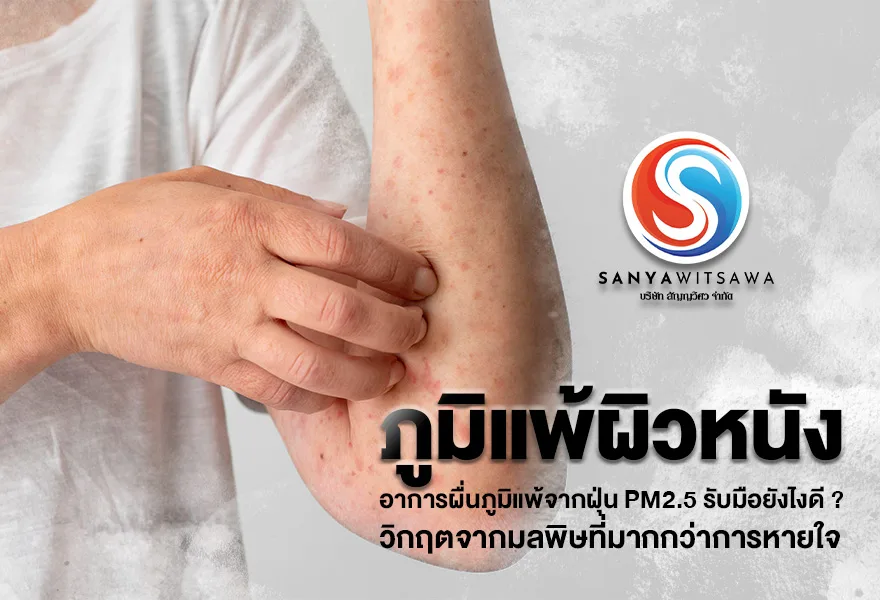
Skin Allergies: How to Cope With PM2.5 Dust Rashes? A Pollution Crisis That Goes Beyond Breathing
Skin allergies: how to cope with PM2.5 dust rashes? A pollution crisis that goes beyond breathing.
Just reading about it makes your skin start to itch!! Have you ever noticed why you feel itchy and uncomfortable, and break out in rashes more easily, when you're in an area full of dust and airborne pollution? We should note first that PM2.5 dust and the fine pollutants suspended in large amounts in the air not only risk harming your respiratory system, but can also penetrate into the layers of the skin, triggering skin-allergy flare-ups, causing red, itchy rashes that gradually spread from one area across the whole body. If you are one of those who experience these symptoms — and they often arise when your skin is triggered by the stimuli around you — you should suspect from the outset that you may be one of those with a skin condition, or "skin allergy."
Atopic dermatitis is a chronic inflammatory skin disease that tends to come and go. The factors that cause it are also varied — for example, genetic abnormalities, the environment, various chemicals, insects, germs, and air pollution. It is a disease that can occur in people of all genders and ages, but it is most often found in infants under 1 year old, followed by older children — that is, children aged 2–12 — and occasionally in adults, though not often. Those with atopic dermatitis are usually very itchy, with swollen red rashes and small blisters in the acute phase; very itchy with red rashes, blisters, dry scabs, and some flaking in the subacute phase; and very itchy with brown rashes that may be raised and thickened, with clearly visible skin furrows, in the chronic phase. In short, beyond the annoying itch, atopic dermatitis rashes also leave marks on various parts of the body, making the skin look unattractive and eroding confidence. So anyone who finds that they have chronic allergy symptoms should see a dermatology specialist, so the doctor can thoroughly assess the symptoms and choose the treatment method best suited to them.
But beyond the allergic reaction on our skin, some people may have additional symptoms. You can roughly observe your own symptoms to see whether you are allergic to PM2.5 dust by the following signs:
- Nasal irritation, congestion, frequent sneezing, and clear nasal discharge
- Coughing or difficulty breathing, resembling a cold
- Some patients may have red eyes, itchy eyes, and watery eyes
- There may be shortness of breath and an inability to breathe fully
- Wheezing breath; in severe cases, this may reach respiratory failure
- On the skin, severe itching leading to red rashes across the skin, with the condition impossible to control
If you are one of those with these symptoms, then you have developed an allergy to PM2.5 dust!!
Allergic reactions from PM2.5 rashes are something that can happen to anyone, because PM2.5 dust is full of components harmful to the body. And the more easily a person reacts to various things, the more severe their dust-allergy symptoms will be as well.
So how should you cope, in an era where everything around you is full of dust, pollution, and PM2.5? Of course, no one can wear a dust mask or a dust-protection suit at all times — but we can change the air around us to be cleaner, by filtering out the airborne dust and contaminants while circulating fresh, new air in.
As for how to do that, follow along and learn together.
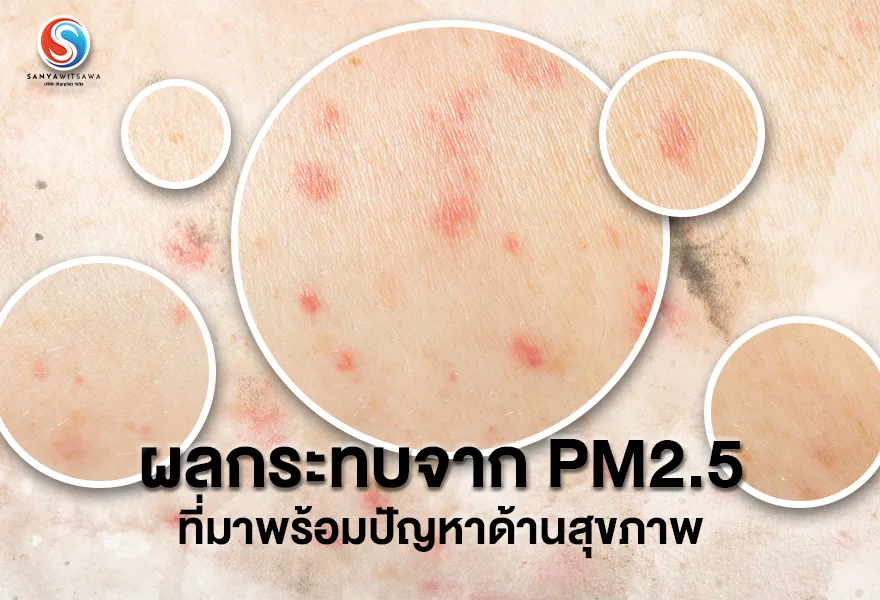
The Impacts of PM2.5 That Come With Health Problems
Before we look at the ways to cope with PM2.5 to protect our skin and respiratory system from allergies, let's first look at the impacts of PM2.5 — at what effects these fine dust particles can have on our bodies. In short, although the dust particles are small, the problems that follow are anything but small…!!
Acute impacts
Did you know? PM2.5 dust can directly damage the cells of the human epidermis, causing increased skin inflammation. Research from the Netherlands found that just 10 micrograms of PM2.5 pollution per cubic meter is enough to trigger skin inflammation. This dust causes the function of skin cells to go awry — both in the skin's defense mechanism against the external environment and in skin repair — especially in patients who already have skin conditions such as atopic dermatitis, eczema, psoriasis, acne, or hair loss, leading to greater irritation, increased itching, and worsened rash flare-ups.
Chronic impacts
One factor that ages the skin faster — beyond sun exposure and smoking — is PM2.5. There has been research on the long-term effects of PM2.5 pollution on human skin, finding that PM2.5 can generate free radicals that harm human skin cells, including in the cell-generation process — which affects skin aging as well as dark spots on the skin. It was found to increase dark spots on the face, increase wrinkles in the nasolabial folds, and also reduce the function of the skin's immune system.
Who is at high risk?
The group at high risk of skin-allergy rashes caused by PM2.5 and air pollution is mostly those with low skin resistance — for example, children, the elderly, those with naturally thin skin, and patients with chronic skin diseases such as atopic dermatitis, hives, and psoriasis. These groups should receive proper care and should be many times more cautious than the general population about living in environments full of dust, smoke, and pollution, so their condition does not worsen.
How to cope with PM2.5 dust allergy rashes?
Basic measures to take when facing PM2.5 dust allergy rashes and the pollution around you:
- During winter, or during periods when the air is especially dry, our skin becomes drier; some people experience itching and flaking skin. In this case, we recommend applying cream regularly to keep the skin moisturized.
- Try to avoid soaps and cleansing agents that are heavily scented or have an excessively high pH, because they can strip away the good oils on the skin's surface, easily causing irritation and easily triggering rash flare-ups.
- Refrain from picking or scratching the rash area, as it may cause the rash there to spread further and prevent it from fully healing.
- Avoid areas with dust, dust mites, pollution, contaminants, and areas with pollen.
- Avoid clothing made with animal fur as a component, as it may cause skin rashes to flare up further.
- About 10% of atopic dermatitis patients are children, and these children are often triggered by certain foods such as milk, eggs, and nuts — so they should eat these in moderation and always eat a balanced diet from all five food groups.
- Keep your mind at ease and free of anxiety, as stress can affect the severity of the disease as well.
And what about treating allergy rashes — what methods are there?
Treatment of allergy rashes should be under the care of a dermatology specialist to assess the severity and the appropriate course of treatment. For initial treatment, a topical corticosteroid is used at a concentration appropriate to the patient's age — because pediatric patients have thinner skin than adults — and the location and lesions of the rash must also be considered.
An important companion to this is a moisturizer, because patients have dry, easily irritated skin and should strengthen the skin to reduce recurrence. If a patient also has a skin infection, an antibiotic covering pathogens in the Staphylococcus spp. group should be considered. In addition, topical Calcineurin inhibitors are now available to help control the condition and reduce the chance of recurrence; this medication should likewise be used under the care of a dermatology specialist.
But of course, the methods described above only address the symptoms — they only solve the problem once the condition has already appeared. If you want to raise your quality of life and stay far from the rashes caused by PM2.5 and air pollution, the thing that can genuinely help us is to change the air around us into clean, safe, pollution-free air.
Reading this far, many of you may be wondering: how can we genuinely change the air around us back to being clean, when the methods described above are not effective enough? In fact, there are now many aids available — such as air purifiers that can completely filter the very finest particles from the air, as well as systems that help circulate good air into the home, transforming your home into a true safe zone from pollution.
Wondering what that method is? Scroll down and read on.
Sanyawit Installs Home Clean-Air Systems — Safe and Far From Allergy Rashes
Clean-air system installation for residences — safe; if you want to stay far from toxic dust, this is the place!!
Sanyawit offers comprehensive design, installation, and consultation services for clean-air systems in the home. To put it simply, Sanyawit's system is an indoor air-quality management system that creates good-quality, clean, and safe air, at the same standard as the sterile rooms of leading hospitals. Through the operation of infection-control air-purification equipment such as the HCU — which filters good air into the home from the very first stage by creating positive pressure, so that stale air is pushed out through the various gaps in the home, preventing outdoor pollution from entering — a working principle that differs from ordinary air purifiers — it ensures that the air inside the home is of good quality, clean, and truly safe from PM 2.5 dust as well as germs, bacteria, and various viruses.
Beyond the quality of air filtration and the removal of airborne contaminants, another thing Sanyawit pays great attention to is "beauty." We have a skilled team that helps design and install the home air-filtration unit to achieve a beautiful placement that isn't in the way or an eyesore — because we believe no homeowner wants their home to look cluttered or unattractive after installing a clean-air filtration system, right? Sanyawit therefore takes care with every design and installation, prioritizing good filtration of contaminants first and foremost while ensuring beauty and tidiness. You can be fully confident that once installed, your quality of life and well-being will genuinely improve.
- Clean, sterile, free of pollution
Cleanliness is controlled with Anti-Bacterial measures
to industrial-grade and medical standards.
- Greater confidence, with fire-resistant materials for added safety
Because we choose to insulate the room walls with Sandwich Panel —
fire-resistant walls that control pathogens, meeting GMP and HACCP standards
as well as international Clean Room Class standards.
- Great prices, quality work beyond its cost
Fast installation, great prices, quality work beyond its cost.
A 1-year workmanship warranty with comprehensive after-sales service.
Sanyawit — the clean-air specialist, meeting Ministry of Public Health standards.
If you're interested in using our service or would like a consultation, you can contact us at any time.