

Asthma: A Life-Threatening Disease If You Keep Living Surrounded by Pollution
Asthma is a disease caused by chronic inflammation of the airways, which makes the bronchial lining and walls over-respond to internal and environmental triggers. This results in difficulty breathing with wheezing, breathlessness, a chronic cough, and chest tightness, especially at night and in the early morning. It can occur at any age and in either sex, and can even be fatal if the symptoms are severe.
The symptoms of asthma include a continuous cough lasting 2–3 weeks and wheezing while breathing, and may be accompanied by other symptoms such as breathlessness, chest tightness, and difficulty breathing. In severe cases it can cause an inability to breathe, so that the body cannot take in oxygen and cannot expel carbon dioxide, leading to respiratory failure and ultimately unconsciousness and death.
Asthma symptoms arise from the constriction or narrowing of the bronchial airways, which reduces the amount of air reaching the lungs. In truth, this is the result of inflammation of the bronchial lining. The name of the disease is derived from the patient's symptoms. Asthma differs from other diseases in that some patients have only mild symptoms while others have severe symptoms that can be fatal, and the conditions that trigger flare-ups differ from patient to patient.
The factors that cause narrowing of the airways are:
- Contraction of the muscles surrounding the bronchi
- Inflammatory swelling of the lining inside the bronchi
- Large amounts of phlegm accumulating inside the bronchi
The contraction of the muscles surrounding the bronchi is in fact the result of inflammation of the bronchial lining. Most of this inflammation is chronic, arising from an excessively strong response. Examples of conditions or triggers that cause flare-ups include breathing allergens into the airways, infections, sinusitis, perfume scents, insecticides, musty odours, exhaust fumes, cigarette smoke, weather conditions, drug allergies, various chemicals, and stress.
As you can see, although asthma is not an illness that causes immediate death, it is a disease that requires special care, especially when one must live amid a polluted environment for long periods, because that pollution can be a key factor causing the symptoms to worsen significantly. So in this article, Sanyawit will help everyone understand the dangers of air pollution to asthma, along with approaches to prevention and remedy, to improve your health over the long term.
Air Pollution and Its Dangers to Health
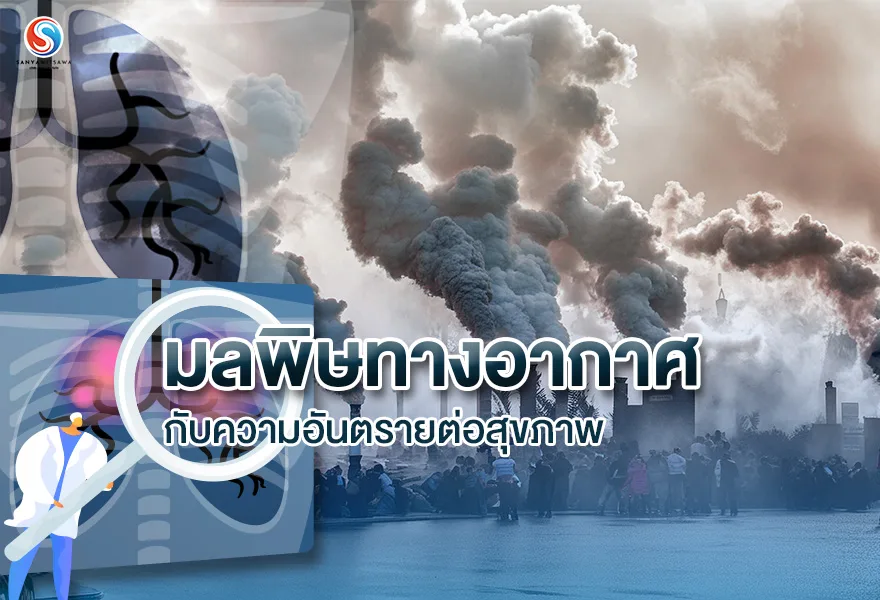
Today, with air pollution rising every day, it has a severe impact on the health of populations worldwide, including the Thai people. Studies of the causes of death from various diseases around the world have found that 9 million people globally die from pollution: 4.2 million from outdoor pollution and 2.9 million from indoor household pollution. Data from the World Health Organization shows that more than 90% of the world's population is exposed to excessive air pollution, causing widespread health problems. Every year, people die prematurely as a result of air pollution, which contributes to diseases such as lung cancer, emphysema, cardiovascular disease, as well as allergies and asthma.
From major research studies over the past decade, we now know that air pollution threatens our health far more than we once understood. The World Health Organization estimates that more than six million people worldwide die prematurely each year due to air pollution, and of these, about ten percent, roughly 600,000, are children under the age of five. Research also shows that when air quality worsens, rates of emergency-room visits and hospital admissions rise, because pollution aggravates existing health problems and triggers heart attacks, strokes, asthma flare-ups, and much more.
The impact on asthma and respiratory allergies depends on the level of pollution and the duration of exposure. If pollution levels are very high, symptoms such as coughing, wheezing, breathlessness, chest tightness, itchy eyes, and itchy skin may appear quickly. If exposure is at a lower level over a long period, it may reduce lung function, increase the risk of developing asthma and lung cancer, and at the same time cause those who already have a disease to experience more severe and worsening symptoms.
For that reason, preventing and protecting health from the pollution around us is something that should be given great importance.
Approaches to Caring for Your Health Amid a Polluted Environment
- Avoid spending long periods in areas where dust levels exceed the standard, especially congested traffic areas with poor ventilation. We can check dust levels on the Pollution Control Department's website or the Air4Thai application; Thailand's air-quality index is divided into 5 levels, ranging from 0 to 201 and above.
- Those at risk of developing symptoms are young children and the elderly, as well as patients with respiratory allergies, asthma, or chronic respiratory disease, pregnant women, and patients with chronic conditions such as heart disease, high blood pressure, and diabetes. Members of these at-risk groups should be careful and take precautions.
- Choosing a face mask: ordinary surgical masks can only block large dust particles but cannot block fine dust, whereas an N95 standard mask can block particles as small as 0.3 microns and can therefore protect against PM2.5.
- We should reduce the air pollution we generate by reducing the use of private vehicles, regularly checking our engines, and avoiding forest burning. In addition, we should reduce indoor pollution by avoiding lighting incense, candles, and mosquito coils, avoiding sprays, and avoiding the use of stoves without an exhaust hood or charcoal stoves indoors.
- Using a quality air purifier is very important for at-risk groups whose home or workplace is in a high-risk area, such as less than 100 metres from a road with heavy traffic, near a drop-off/pick-up car park, or near a factory or construction site. The recommendation when choosing an air filter is that it must be a fine-dust filter that is a HEPA filter only. You should not choose a device that produces ozone, as it can irritate the airways.
HCU by Sanyawit, the infection-control air purifier, demonstrably reducing dust and meeting Ministry of Public Health standards.
With air-impurity filtration technology designed specifically for clean rooms and leading hospitals, the HCU air purifier is one of the most effective air purifiers available today. It is designed to suit a wide range of uses and room sizes, and can thoroughly filter pollutants, PM2.5 dust, pathogens, bacteria, pollen, and the various fine particles suspended in the air.
HCU by Sanyawit is a clean-air innovation designed for genuinely clean air filtration, with filtration efficiency as high as 99.999% at 0.3 microns, capturing fine contaminants many times more effectively than ordinary air filters on the market. It can therefore make the air around you genuinely clean, pure, and free of contaminants. You can measure these dust levels with a dust meter, and we guarantee a clearly noticeable reduction.
In addition, the HCU air purifier delivers high airflow that can circulate throughout the installation area, yet runs quietly at just 50 decibels, so it does not disturb work or daily living and can be installed in a bedroom or patient room without affecting rest. Every HCU unit has passed standard testing by a Third Party company and undergoes ISO 14644-3 HEPA Installation Leak Testing, with Leak Acceptance < 0.01% for every unit, and has been installed for use in more than 600 hospital clean rooms across Thailand.
Although there is currently no perfect way to prevent asthma, preventing and controlling symptoms to keep them from flaring up is achievable and is itself part of treating the disease. So caring for yourself properly, along with choosing an effective air purifier, is essential.
Sanyawit is a leading provider of clean-air-system products and solutions and air-pollution control with global coverage, delivered by a professional team with direct experience working with leading hospitals, to meet customers' needs by providing quality products that suit their use and genuinely solve their problems.
“Because your every breath is precious.”
HCU by Sanyawit, a leader in clean air, meeting Ministry of Public Health standards.
If you are interested in owning an air purifier, you can contact us anytime.